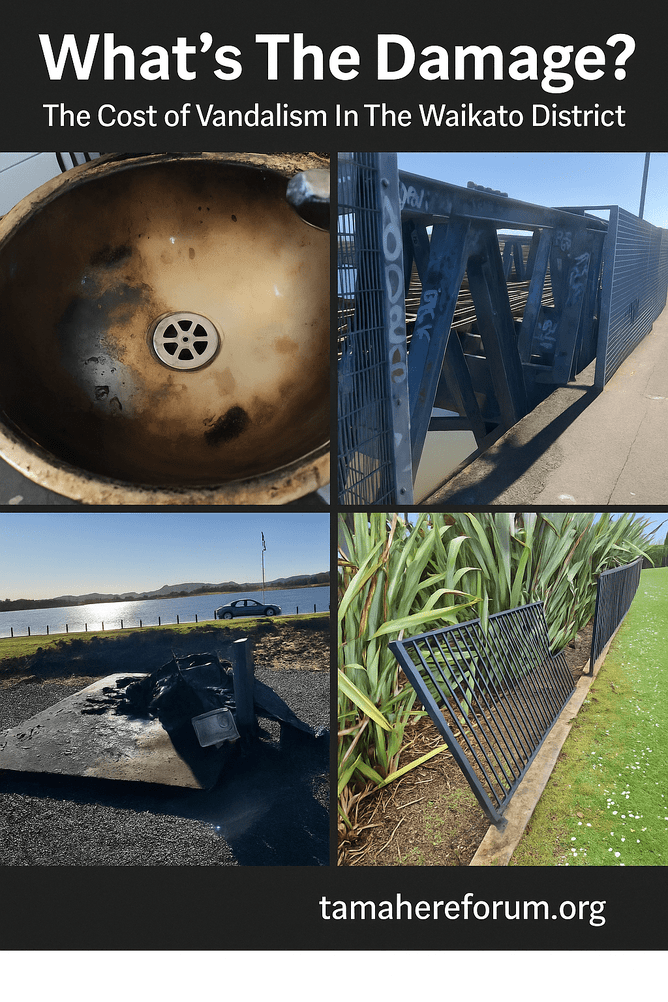
Waikato District Council says vandalism across Council assets has cost ratepayers over $120,000 between January and November 2025, with further costs expected as repairs continue into the end of the year and beyond.
To highlight this needless spend, Council is launching a summer awareness campaign titled What's the damage?
The campaign aims to make communities aware of the physical damage being caused to public assets such as sports fields, toilets, and park furniture, and the financial damage of repairing and replacing vandalised facilities.
Confirmed repair costs from Council’s open spaces, facilities, and graffiti removal alone total $122,852.65 (excluding GST) for the period. This reflects damage to parks, toilets, walkways, and community facilities across the district. The cost does not include vandalism-related damage to roading assets such as skid marks, signage or barriers, staff time diverted from planned work, contractor call-outs, or additional incidents occurring in November and December.
Council’s General Manager for Assets and Infrastructure, Megan May, says the cost of vandalism falls on ratepayers.
“Repairing vandalism takes funding away from other priorities, including maintaining services and improving facilities for the community,” says Megan May. “Ratepayers foot the bill for repairing the damage, not the people causing it.”
Beyond the financial impact, vandalism creates ongoing safety risks and reduces access to public facilities.
“Damage to bridges, playgrounds, toilets, and public walkways can make them unsafe or unusable, which is particularly concerning during the busy summer period when demand is high,” says Megan May.
“We know it’s a very small proportion of our communities causing this damage, but repeated vandalism puts pressure on teams to carry out urgent repairs so facilities can stay open and safe,” Megan May says.
“That work takes resources away from planned maintenance and improvements”.
As part of What’s the damage?, Council is encouraging residents to report vandalism as soon as they see it using the free Antenno app, which allows issues to be logged directly with Council for action.
“Early reporting through the Antenno app helps us respond faster, reduces safety risks, and limits repeated damage. Community reporting makes a real difference,” says May.
If members of the public witness vandalism occurring, they’re encouraged to contact the Police.
Huntly footbridge, where a steel safety panel was cut out, and temporary mesh replacements were removed six times in two weeks in November. The permanent replacement steel panel is expected to cost around $3500.
Lake Puketirini toilets, Huntly, which have been destroyed by arson three times. A fire-resistant toilet was reinstated in November at a cost of around $15,000.
Centennial Park, Ngaaruawaahia, where public toilets were graffitied and set alight in November.
Tamahere Village Park, where fencing around a storm water asset has been repeatedly vandalised, including damage to temporary repairs between October and December.
Council says preventing vandalism and reporting damage early is key to keeping public spaces safe and protecting ratepayer investment.
